News
October 9. - 2026
Do fly sheets really help horses during fly season?
As warmer weather brings increased insect activity, many horses experience fly avoidance behaviours such as tail swishing, stomping, and head shaking. For horses affected by insect bite hypersensitivity or sweet itch, fly protection is an essential part of summer management. A recent study explored whether polyester fly sheets reduce irritation and improve comfort, while also examining their effects on heart rate, body temperature, stress levels, and overall horse welfare. The findings offer valuable insights for horse owners looking to balance effective fly protection with equine welfare and performance.
Thermoregulation, stress response, and activity levels monitored with physio-loggers
Researchers from the University of Tennessee used Star-Oddi DST milli-HRT ACT and DST centi-HRT ACT implantable data loggers to continuously monitor heart rate, activity, and body temperature in five healthy horses during a 10-week fly sheet study. This enabled researchers to track changes in equine thermoregulation, stress response, and activity levels associated with fly sheet use during peak insect season. The continuous data collected by the Star-Oddi loggers were combined with behavioural observations and cortisol measurements, providing a comprehensive assessment of the effects of fly sheets from the article) on horse welfare and fly avoidance behaviour.
Thermoregulation, stress response, and activity levels monitored with physio-loggers
Researchers from the University of Tennessee used Star-Oddi DST milli-HRT ACT and DST centi-HRT ACT implantable data loggers to continuously monitor heart rate, activity, and body temperature in five healthy horses during a 10-week fly sheet study. This enabled researchers to track changes in equine thermoregulation, stress response, and activity levels associated with fly sheet use during peak insect season. The continuous data collected by the Star-Oddi loggers were combined with behavioural observations and cortisol measurements, providing a comprehensive assessment of the effects of fly sheets from the article) on horse welfare and fly avoidance behaviour.
What did the Star-Oddi loggers reveal?
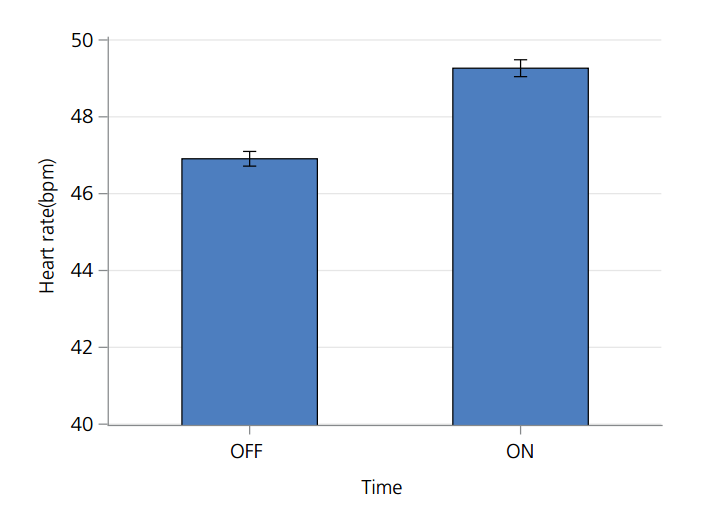
Data from the Star-Oddi physio-loggers showed that horses wearing fly sheets had a consistently higher heart rate than when fly sheets were not worn (see figure below), indicating a measurable physiological response to fly sheet use. The loggers also recorded changes in body temperature, although responses varied between individual horses. At the same time, fly sheets significantly reduced fly avoidance behaviours, particularly head tossing and tail swishing. These findings suggest that while fly sheets can improve comfort by reducing insect irritation, they may also influence physiological responses, highlighting the importance of balancing effective fly protection with thermoregulation and overall horse welfare during peak insect season.

Figure 5 from the article showing heart rate with and without fly sheets.
The article was published in the Equine Veterinary Journal.