News
September 3. - 2026
How Fish Manage Temperature Changes Through Heart Rate
Temperature plays a fundamental role in shaping the physiology and behaviour of fish. As ectothermic animals, most fish depend on their surrounding environment to regulate body temperature, yet many species actively seek different thermal habitats through their movements. In highly dynamic marine environments, where temperature can change rapidly with depth, understanding how fish respond to these shifts is crucial. Recent research is exploring the connections between environmental temperature, body temperature, and cardiovascular function, offering new insights into the mechanisms that help fish cope with changing conditions and maintain physiological performance.
ECG recorded during cooling cycles
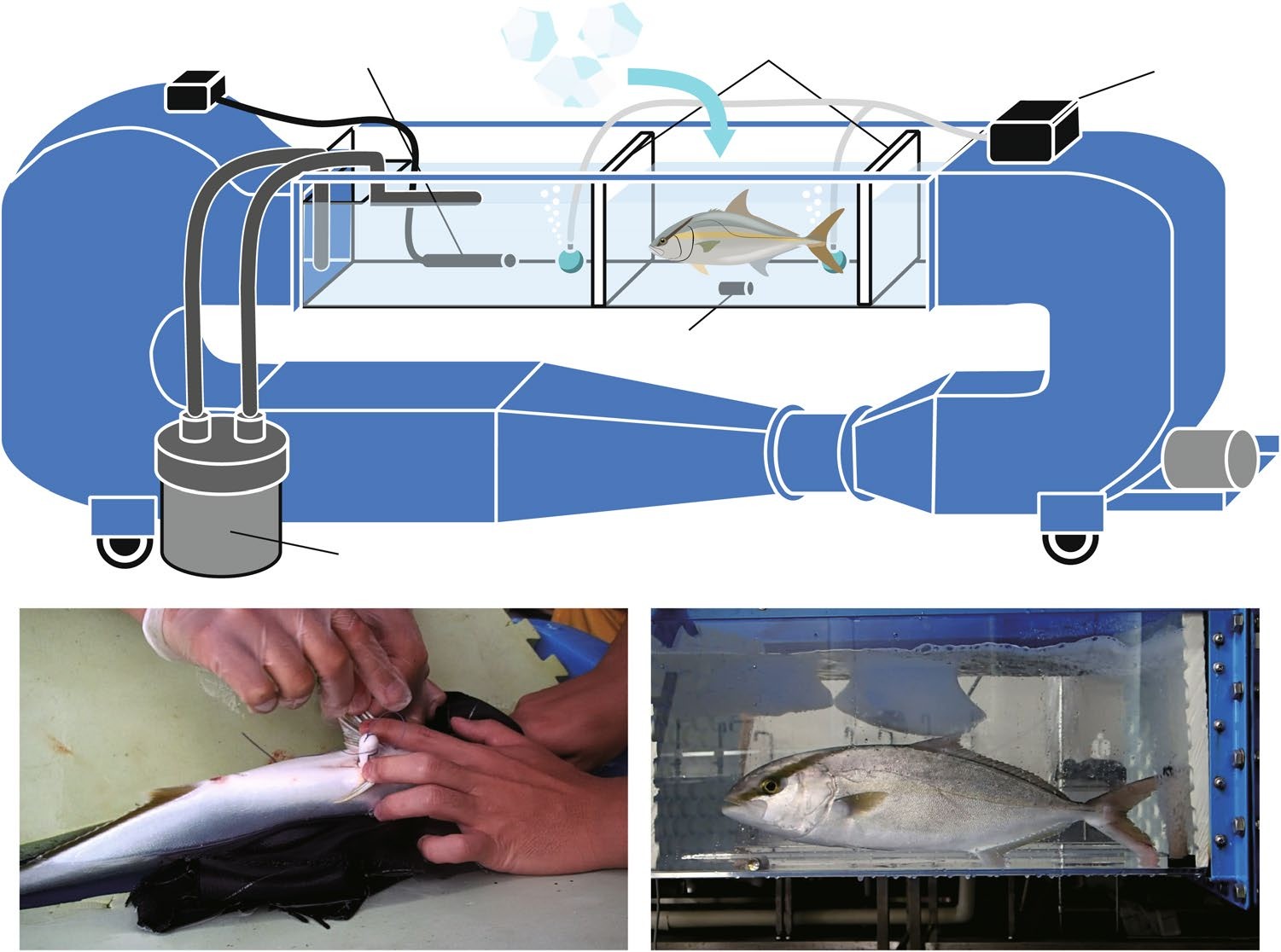
Scientist from Nagasaki University implanted 4 fish with Star-Oddi’s DST milli-HRT, and two fish with Star-Oddi’s DST milli-HRT ACT. ECG were recorded for 6 -15 seconds, depending on the fish species, at a sampling frequency of 100-150Hz. Three to four days after the implantation, the experiment started with 4-6 cooling cycles per fish, were, in each cycle, the water temperature was cooled to 6-18°C for 30 minutes, and then rewarmed over about 60 minutes.. Body temperature was also measured and compared to the water temperature. Below is a picture of the experimental setup (fig 1. From the article) showing the chamber used for the cooling cycles.

Fig 1 showing the experimental setup used for the cooling cycles.
Cardiac response depends on whether the fish is cooling or warming
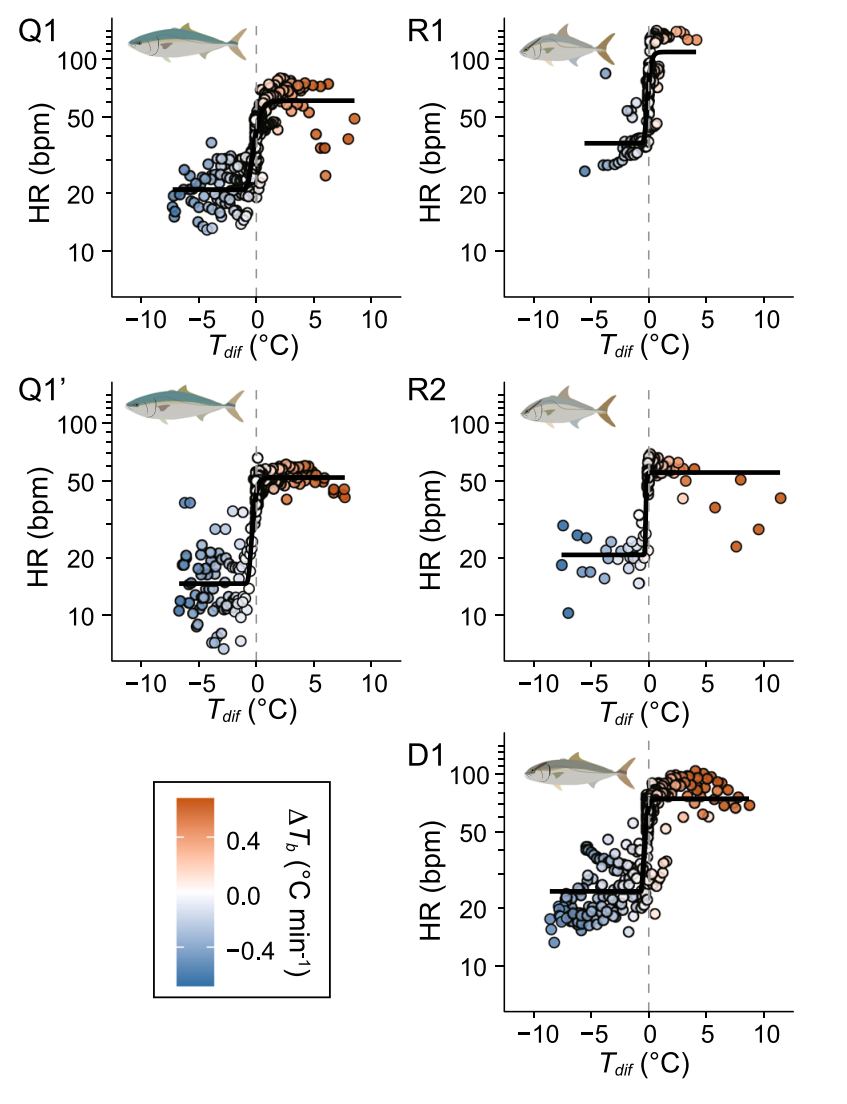
New research on amberjacks (Seriola spp.) is providing fresh insights into how fish respond to rapid environmental temperature changes. While body temperature closely followed changes in water temperature, heart rate showed a more complex response. During cooling, heart rates remained relatively low, whereas during warming they increased substantially, creating distinct cardiac responses between cooling and warming phases (see figure from the article below). This phenomenon, known as thermal hysteresis, indicates that heart rate is influenced not only by the fish’s current body temperature but also by its recent thermal history. Importantly, individuals with higher heart rates experienced faster rates of body temperature change, suggesting that cardiovascular activity may contribute to regulating heat exchange. The fish had reduced heat loss during cooling and enhanced heat gain during warming. These findings highlight a potential link between heart rate, thermal physiology, and temperature adaptation in pelagic fish, offering new perspectives on how fish cope with dynamic marine environments and changing ocean temperatures.

Figure 4 showing relationship between the temperature difference between water and abdominal cavity and heart rate
Further results can be read in the article published in Fisheries Science and can be found here.