News
January 29. - 2026
Iceland Completes Annual Capelin Survey
Iceland has completed its annual winter survey of capelin stocks in the waters north of the country. The survey was conducted by a fleet of five vessels - two dedicated research vessels and three commercial fishing vessels - covering key pelagic areas.
The survey confirmed that the capelin migration remained partly north of its typical winter distribution, reflecting the species’ natural variability. Acoustic measurements and biological sampling were used to estimate stock size and distribution.
Based on the survey results, the capelin quota for the current season has been set at 197,000 tons. While this allows for a limited fishery, the quota is small compared with historical levels. In previous periods of high abundance, capelin quotas have on several occasions exceeded one million tons, highlighting the large natural fluctuations in the stock.
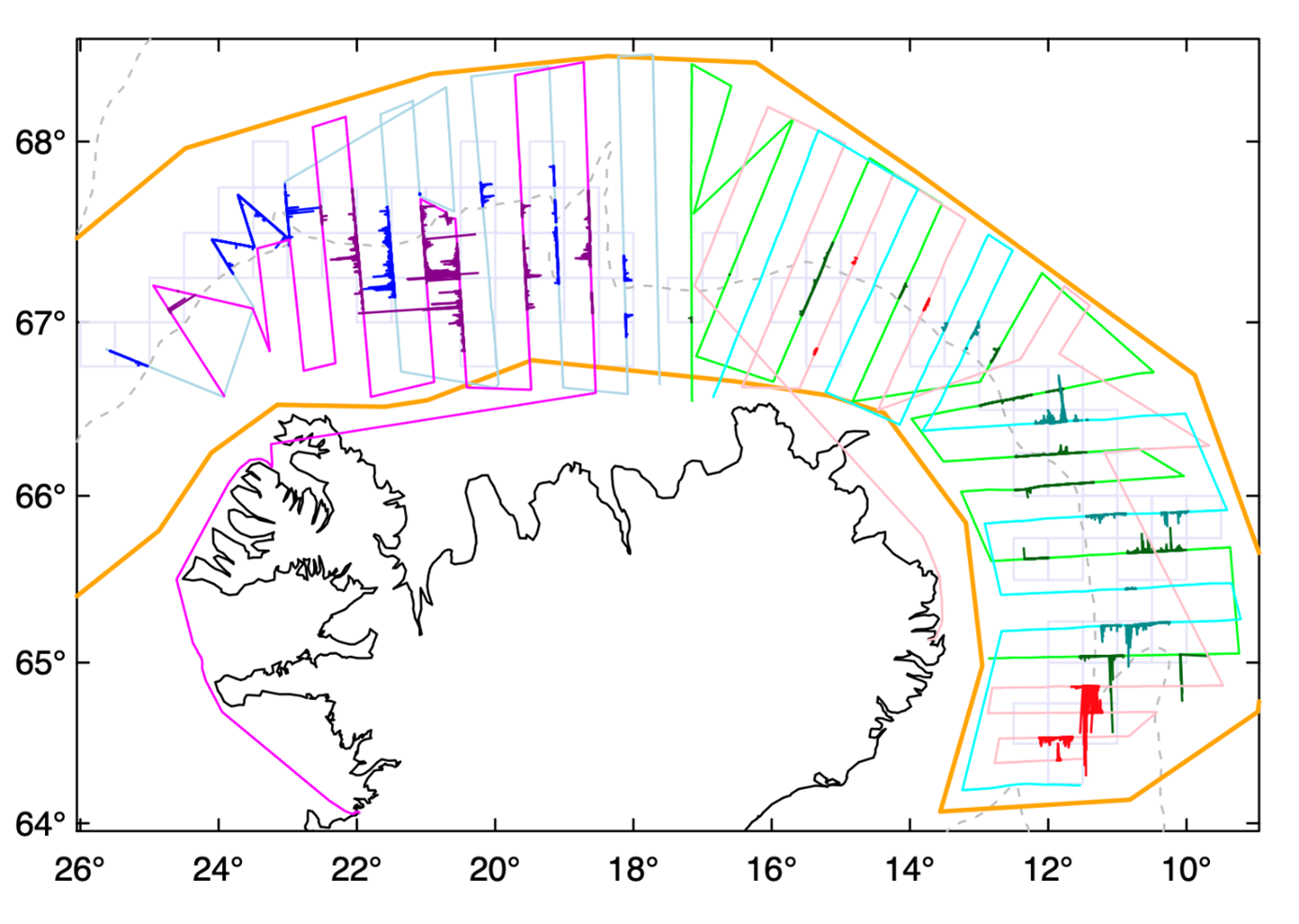
Layout of Iceland’s Annual Winter Capelin Search 
Every winter, Iceland sets out on a familiar - but never predictable - mission: finding the capelin. This small fish plays a big role in the North Atlantic ecosystem, and each year its whereabouts keep scientists and fishermen equally alert.
The vessels' mission sounds simple - track the capelin's location, abundance and stock health - but in practice it's anything but. The figure above shows the survey track lines of the five participating vessels, displayed in different colors for the period 19–25 January 2026, along with capelin density based on acoustic (echo-sounder) measurements (lines perpendicular to the survey tracks)/ fig. from Icelandic Marine and Freshwater Research Institute
As often happens, the capelin chose its own path. Instead of appearing exactly where expected, it has lingered north of Iceland longer than usual - reminding everyone that nature follows no schedule but its own. Using echo sounders and sampling equipment, the vessels sweep large areas of ocean, gradually piecing together the story hidden beneath the surface.
The findings from the survey form the scientific basis for fisheries management decisions and provide guidance for the capelin fishery in the season ahead.