News

March 10. - 2026
Implantable Loggers Reveal Physiological Signatures of Pertussis Infection
A recent study published in the ASM journal mSphere investigates how different clinical strains of Bordetella pertussis, the bacterium responsible for whooping cough vary in their ability to cause disease. Researchers from the FDA and CDC compared three pertactin-negative (PRN-negative) strains with a pertactin-positive reference strain using the well-established baboon infection model. The work is particularly timely, as PRN-negative strains have become increasingly common in countries using acellular pertussis (aP) vaccines. The study showed that while all strains colonized the airway similarly, there were clear differences in disease severity between strains, suggesting that not all circulating PRN-negative variants produce the same clinical effects.
Reduced daytime activity with reference strain
An important methodological element of the experiment was the use of DST micro-ACT data loggers from Star-Oddi, which were implanted subcutaneously in the baboons. These miniature loggers continuously record body temperature and activity throughout the infection period every 10 minutes, allowing researchers to quantify behavioral and physiological changes associated with disease progression. Using this approach, the team observed that animals infected with the reference strain exhibited significant reductions in daytime activity from pre infection (d(-5) to d(-1)) and disruptions in normal diurnal body temperature rhythms during peak infection (d6, d8, d9, d11 and d12). These objective measurements provided a valuable physiological readout of illness severity that complemented traditional indicators such as bacterial load and immune responses.
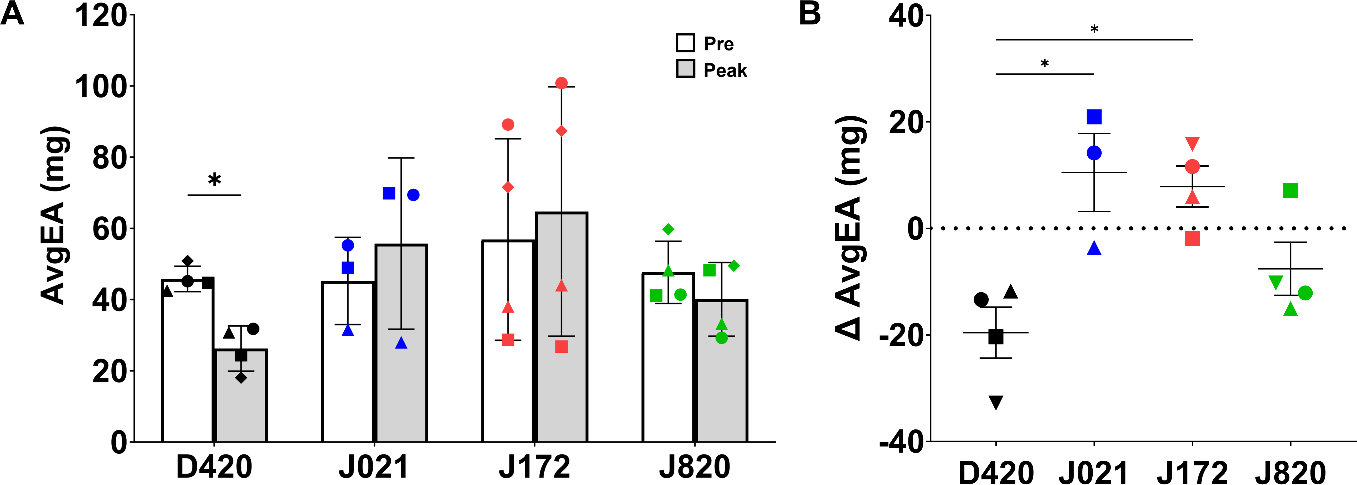
Figure 1: Activity following the challenge tracked by DST micro-ACT.a) Pre challenge data white and peak challenge data (gray) are showned for AvgEA (average activity over one minute) b) the change in AvgEA between pre and peak-challenge ofr individual animals.
Altered Circadian Temperature Patterns During Infection
One of the most striking physiological signals observed during infection was a shift in nighttime temperature patterns. Baboons infected with the reference Bordetella pertussis strain exhibited a noticeable increase in nighttime body temperature compared with their normal circadian rhythm. This elevation occurred during the period of peak disease and coincided with other signs of infection, including reduced activity and increased leukocyte counts. Because of the continuous temperature measurements, the researchers were able to capture these subtle changes in daily body temperature patterns that would likely be missed with intermittent measurements.
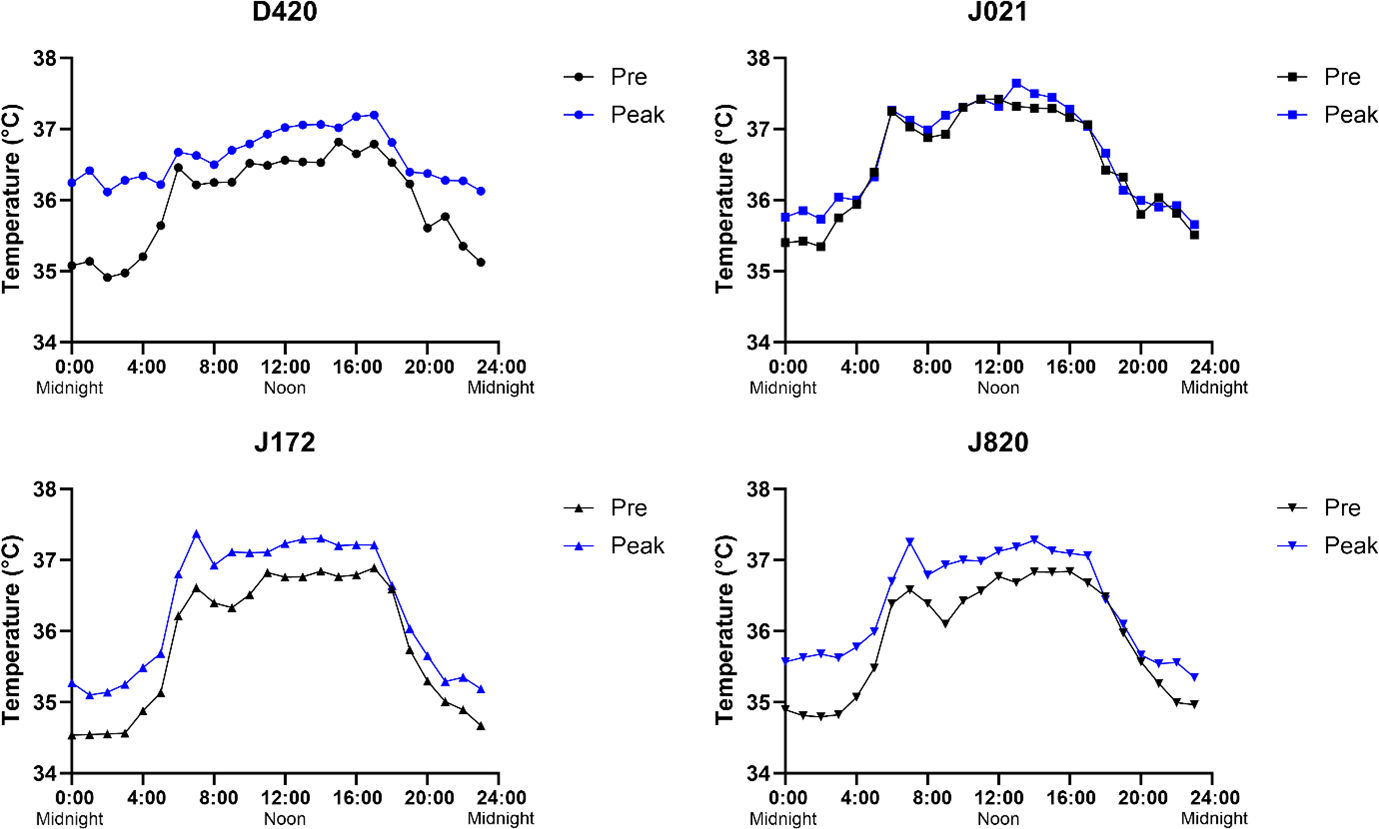
Figure 2: Body temperature patterns observed over 24-h at pre- and peak infection.
Continuous Monitoring Reveals Subtle Differences in Disease Severity
Interestingly, baboons infected with some PRN-negative strains showed much smaller changes in activity and temperature patterns, consistent with other signs of reduced virulence such as lower leukocytosis and less coughing. The study highlights how implantable biologging tools can strengthen infectious disease models by capturing continuous physiological data that would otherwise be difficult to quantify. By combining microbiology, immunology, and high-resolution animal monitoring, the research demonstrates the growing role of advanced data loggers in modern biomedical studies, providing deeper insight into how pathogens affect host physiology in real time.
You can read more about their findings in the paper.