News
September 3. - 2026
Measuring Marine Carbon Fluxes with Greater Precision
The ocean stores approximately 98% of the dissolved inorganic carbon (DIC) within the atmosphere-ocean system, making it a critical component of the global carbon cycle. While the role of open-ocean processes in carbon storage is well documented, the contribution of coastal ecosystems and benthic communities remains less understood. In particular, suspension-feeding organisms such as marine sponges, bivalves, and ascidians may play an important role in carbon cycling and ocean acidification dynamics through their continuous filtration of seawater. This study introduces an innovative methodology for directly measuring dissolved inorganic carbon fluxes associated with these organisms, providing new opportunities to better understand their contribution to blue carbon processes and coastal ecosystem function. By improving how researchers quantify carbon exchange in marine habitats, this approach could help advance our understanding of carbon sequestration and ecosystem resilience in a changing ocean.
Star-Oddi DST CT used for temperature correction and environmental monitoring
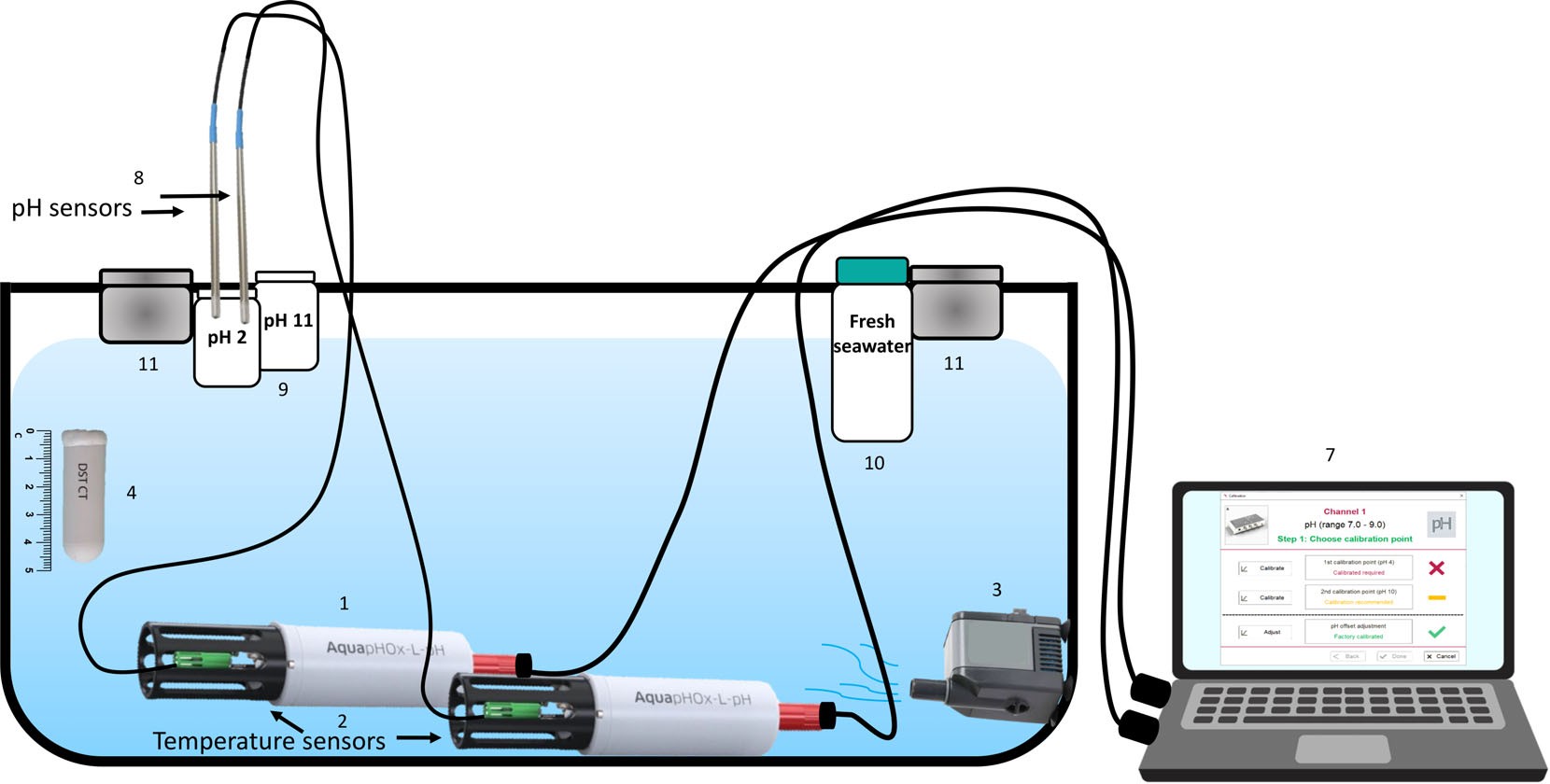
To support this new approach, the researchers used the Star-Oddi DST-CT logger to continuously record temperature and salinity alongside the pH measurements during in situ deployments (see below fig 2 from the article). Accurate environmental data are essential for converting pH readings into dissolved inorganic carbon (DIC) concentrations, as even small variations in temperature can influence sensor performance and carbonate chemistry calculations. During Calibration, the DST CT was also used as a reliable external thermometer to check and correct temperature offsets in the pH loggers, helping to ensure reliable DIC flux estimates. By combining high-resolution pH monitoring with continuous environmental measurements, the study established a robust framework for assessing carbon fluxes generated by suspension-feeding organisms in their natural habitats.
Star-Oddi DST CT used for temperature correction and environmental monitoring
To support this new approach, the researchers used the Star-Oddi DST-CT logger to continuously record temperature and salinity alongside the pH measurements during in situ deployments (see below fig 2 from the article). Accurate environmental data are essential for converting pH readings into dissolved inorganic carbon (DIC) concentrations, as even small variations in temperature can influence sensor performance and carbonate chemistry calculations. During Calibration, the DST CT was also used as a reliable external thermometer to check and correct temperature offsets in the pH loggers, helping to ensure reliable DIC flux estimates. By combining high-resolution pH monitoring with continuous environmental measurements, the study established a robust framework for assessing carbon fluxes generated by suspension-feeding organisms in their natural habitats.

Fig. 2 showing micro conductivity and temperature logger (DST-CT, Star-ODDI, Iceland, 4) submerged in the tank and used to correct temperature offsets.
Results at a Glance
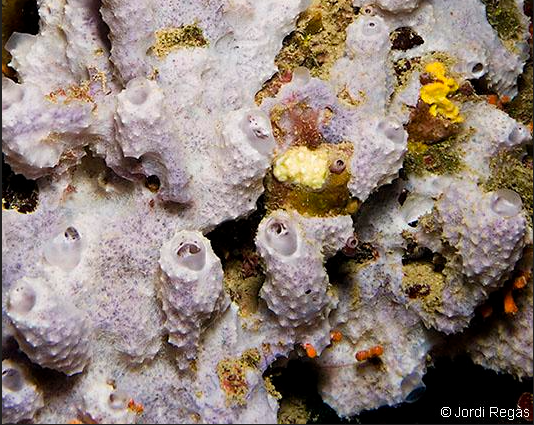
The study demonstrated that the new pH optode-based approach can directly and continuously quantify dissolved inorganic carbon (DIC) fluxes from marine sponges in their natural environment. The method successfully detected significant carbon release from two high microbial abundance sponge species, while also highlighting differences in carbon processing among sponge groups. Importantly, the measurements showed high precision and low uncertainty, supporting the technique as a promising tool for investigating carbon cycling by suspension-feeding organisms in coastal ecosystems. Continuous environmental monitoring was supported by Star-Oddi DST CT loggers, which provided high-resolution temperature and salinity data used to normalise alkalinity measurements and support DIC calculations throughout the study.
Further results and methods can be viewed in the article published in Limnology and Oceanography: Methods