News
April 28. - 2026
Seasonal and Rhythmic Shifts in Heart-Rate in Hibernating Japanese Black Bears
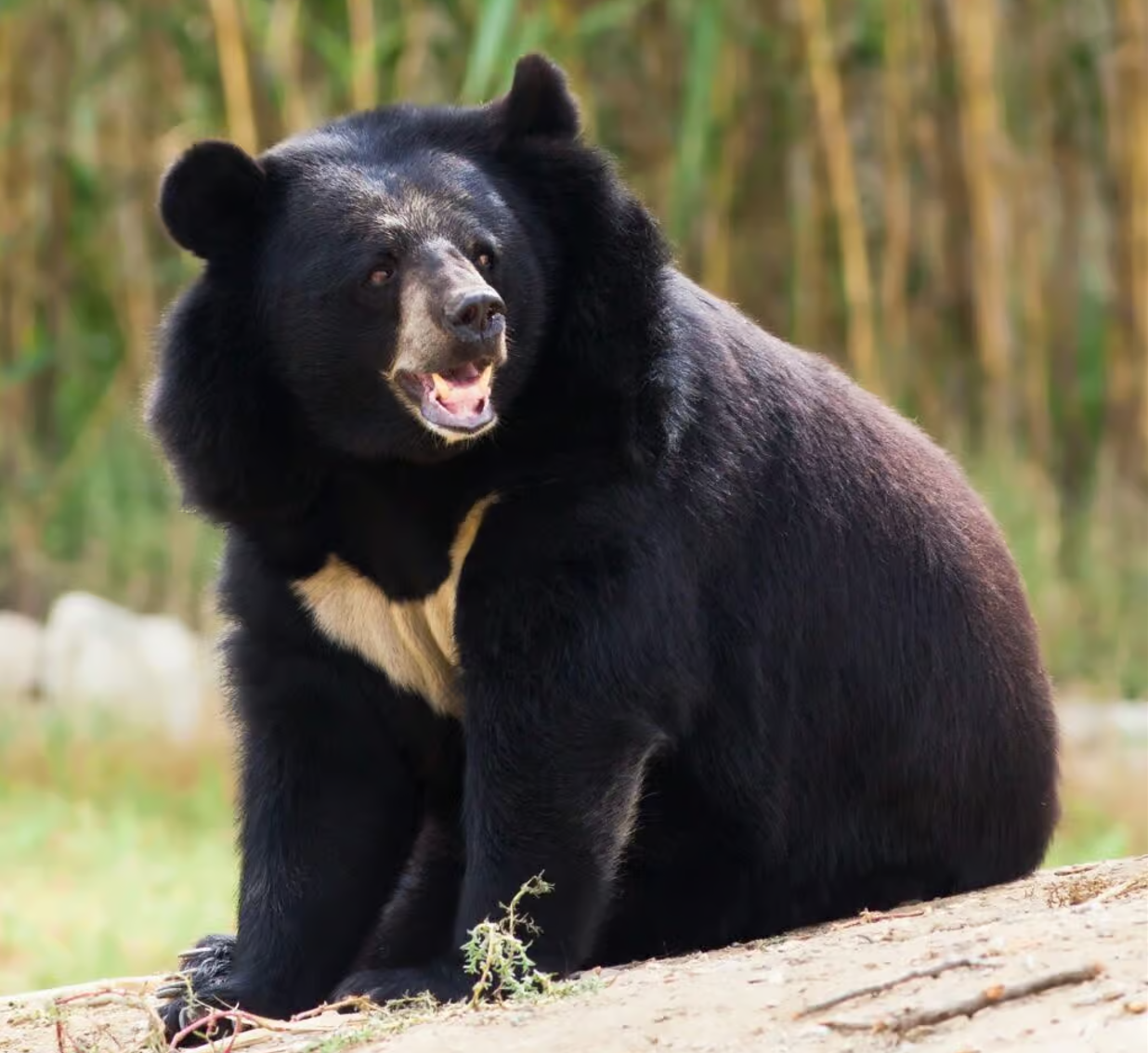
Japanese black bears (Ursus thibetanus japonicus) undergo a pronounced seasonal metabolic shift, gaining weight in autumn and suppressing metabolism during winter hibernation. While bears in Alaska and Scandinavia show well‑defined circadian or infradian rhythms in body temperature (Tb) and heart rate (HR), the full dynamics in Japanese black bears remain less understood. Current evidence suggests they maintain a 24‑hour rhythm in Tb and HR before and after hibernation but rely primarily on autonomic regulation once hibernating. To better understand hibernation physiology in this subspecies, ongoing simultaneous monitoring is necessary.
Heart rate measured every 30 minutes for the duration of the hibernation
Scientists from Hokkaido University and Yamaguchi University studied hibernation in six adult male Japanese black bears, aged 7–26 years. Each bear was surgically implanted with a Star‑Oddi DST centi‑HRT data, which recorded subcutaneous temperature (Tb) and heart rate (HR) every 30 minutes, using a 4‑second ECG recordings for HR calculation and had a temperature range of 5–45 °C. Five bears received implants in September 2017 and one in November 2017, with continuous data collection extending through March or May of the following year.
Heart rate considerably lower during hibernation with infradian cycles of body temperature
Subcutaneous body temperature (Tb) and heart rate (HR) in six Japanese black bears showed strong seasonal modulation, with both metrics dropping sharply after den entry, remaining suppressed throughout hibernation, and returning to active levels in spring. Although Tb fluctuations were smaller than those seen in small hibernators, the bears displayed notable individual variation and multi‑day infradian cycles, with most individuals losing their 24‑h rhythm during hibernation. Average Tb remained relatively high compared with reports from other bear populations, and heavier individuals tended to maintain higher Tb, suggesting a body‑condition–linked thermoregulatory strategy. HR declined markedly within the first two weeks of hibernation and stayed low until emergence from the den, consistent with metabolic suppression. These patterns highlight shared circadian traits across bear species while also indicating potential regional physiological adaptations in Asiatic black bears.
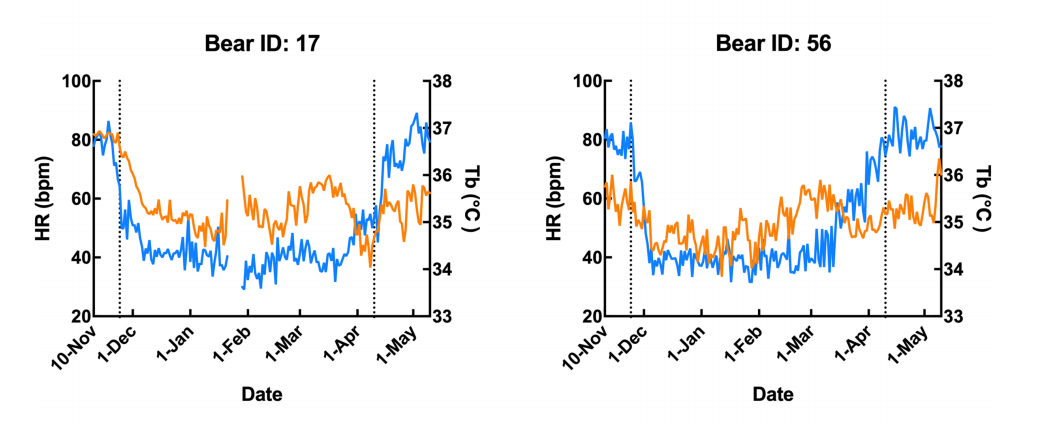
From fig. 1 showing Tb in orange and HR in blue for two bears, showing changes in both during pre-, post- and hibernation.
Further results can be read in the article published in PeerJ.