News
April 28. - 2026
Torpor: Understanding How Animals Endure Extreme Conditions
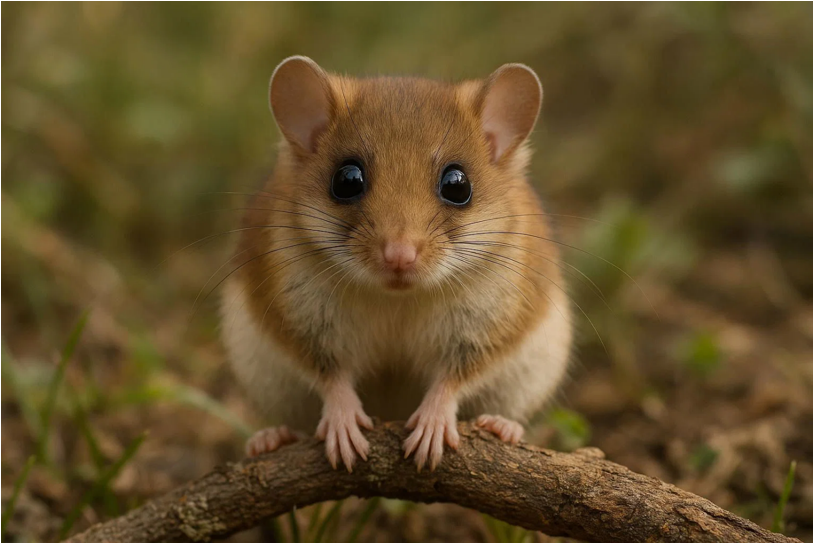
In a recent collaborative study, scientists from China, Germany, and the UK monitored core body temperature in Kellen's dormice using Star‑Oddi’s DST nanoRF‑T during controlled torpor experiments. By gradually lowering ambient temperatures from 30°C to 5°C, the team tracked how these animals enter torpor and maintain hypothermia under challenging conditions.
Kellen’s dormice go into torpor
Mammals use hibernation as a survival strategy, although little is known about the underlying mechanisms. Previous studies have revealed cold-tolerant adaptations, such as protective protein modulation in hibernating brown bears and TRPM8 channel alterations in ground squirrels and hamsters. Building on this basis, the new work offers the first proof that G. kelleni is capable of going into facultative hibernation, a stress-induced reaction brought on by environmental changes as opposed to seasonal cues. These findings contribute to a growing body of work exploring how hibernators suppress metabolism, reduce oxygen consumption, and tolerate prolonged hypoxia, traits that may hold relevance far beyond ecology.
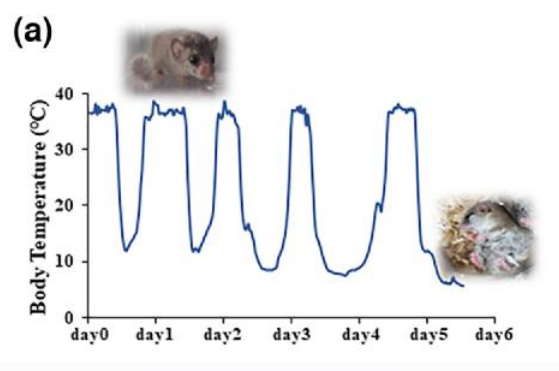
Fig 3a from the article showing core body temperature of dormice in ambient temperature of 5°C
Consistent torpor seen in dormice kept at 5°C
Dormice consistently entered torpor when kept at 5°C under dark, food, and water-restricted settings, according to continuous core body temperature monitoring using implanted real-time temperature loggers. The dormouse's ability to produce severe metabolic depression is supported by the reduced core-body temperature and hypoxia tolerance, which resembles patterns seen in other heterothermic animals. Systemic hypoxia during torpor was directly demonstrated by histological investigations, which showed significantly enlarged hypoxic areas in all tissues studied. Molecular mechanisms supporting hypoxia tolerance were highlighted by transcriptomic profiling, which also revealed coordinated up-regulation of oxygen-transport pathways, including genes linked to oxygen carrier function. Together, these results highlight the necessity for further research into new molecular determinants of hibernation while characterising the hypoxia-adaptation phenotype in hibernating mammals and identifying important genetic components underlying this physiological response.
Further results can be found in the article published in Molecular Biology and Evolution.
Photo can be found here.