News
June 15. - 2026
Star-Oddi Temperature Recorders Reveal Causes of Caldera Lake Winter Overturn
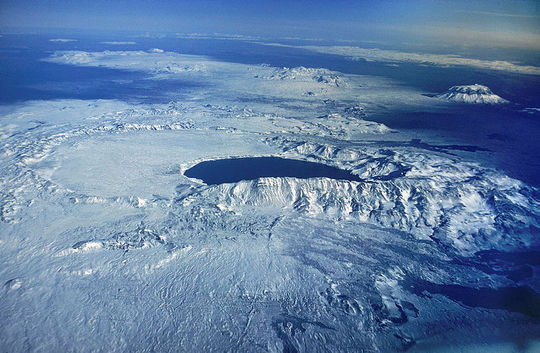
Lake Öskjuvatn, a deep caldera lake in Iceland’s remote Dyngjufjöll mountains, is one of the country’s most striking volcanic landscapes. Formed after the explosive 1875 eruption of Askja, the caldera lake now spans 11 km², reaches 217 m depth, and is fed solely by local precipitation, geothermal springs, and subsurface seepage. Although the lake is typically ice‑covered in winter, its warm marginal springs and geothermal activity maintain persistent openings in the ice. When remote sensing revealed unexpected winter ice loss in 2012, it raised important scientific questions about changing thermal conditions, potential volcanic unrest, and the dynamics of Icelandic highland lakes. Subsequent field campaigns in 2012 and 2013 investigated these anomalies, providing new insights into this unique and thermally active system.
Temperature data used to interpret ice-cover anomalies
High‑resolution temperature measurements were central to understanding the unusual winter ice loss on Lake Öskjuvatn. During field campaigns in 2012 and 2013, researchers collected continuous vertical profiles using CTD sensors, capturing temperature changes from surface to 200 m depth under both open‑water and ice‑covered conditions. These CTD profiles, corrected for the lake’s low‑salinity freshwater composition, revealed the fine‑scale thermal structure that governs mixing, density, and heat distribution in this deep caldera lake. Long‑term moored Star-Oddi's DST centi-T recording every 10 minutes further documented how thermal variability evolves through seasons and in response to geothermal inputs. Together, these temperature datasets provide the foundation for interpreting ice‑cover anomalies and assessing the role of geothermal activity in one of Iceland’s most remote volcanic lakes.
Temperature anomalies found at the bottom of the caldera lake
Star-Oddi’s CTD temperature profiles collected in April 2012 and 2013 reveal striking differences between the ice‑free and ice‑covered states of Lake Öskjuvatn. In 2012, CTD casts showed warm near‑bottom anomalies linked to geothermal activity, along with slight salinity reductions and signs of recent deep‑water upwelling in the western basin. These temperature anomalies, reaching up to 4.9 °C at the bottom, indicate active vertical heat transport that helps maintain the lake’s persistent winter opening. By contrast, the 2013 CTD data showed no near‑bottom anomalies and a clear two‑layer structure beneath the ice, with pronounced temperature and density variability in the upper 60 m. The presence of small‑scale eddies, density tilting, and upwelling/downwelling patterns highlights dynamic under‑ice mixing processes driven by wind forcing along the ice edge. Together, these CTD‑based temperature observations provide essential insight into the lake’s thermal regime, geothermal influence, and seasonal mixing behaviour.
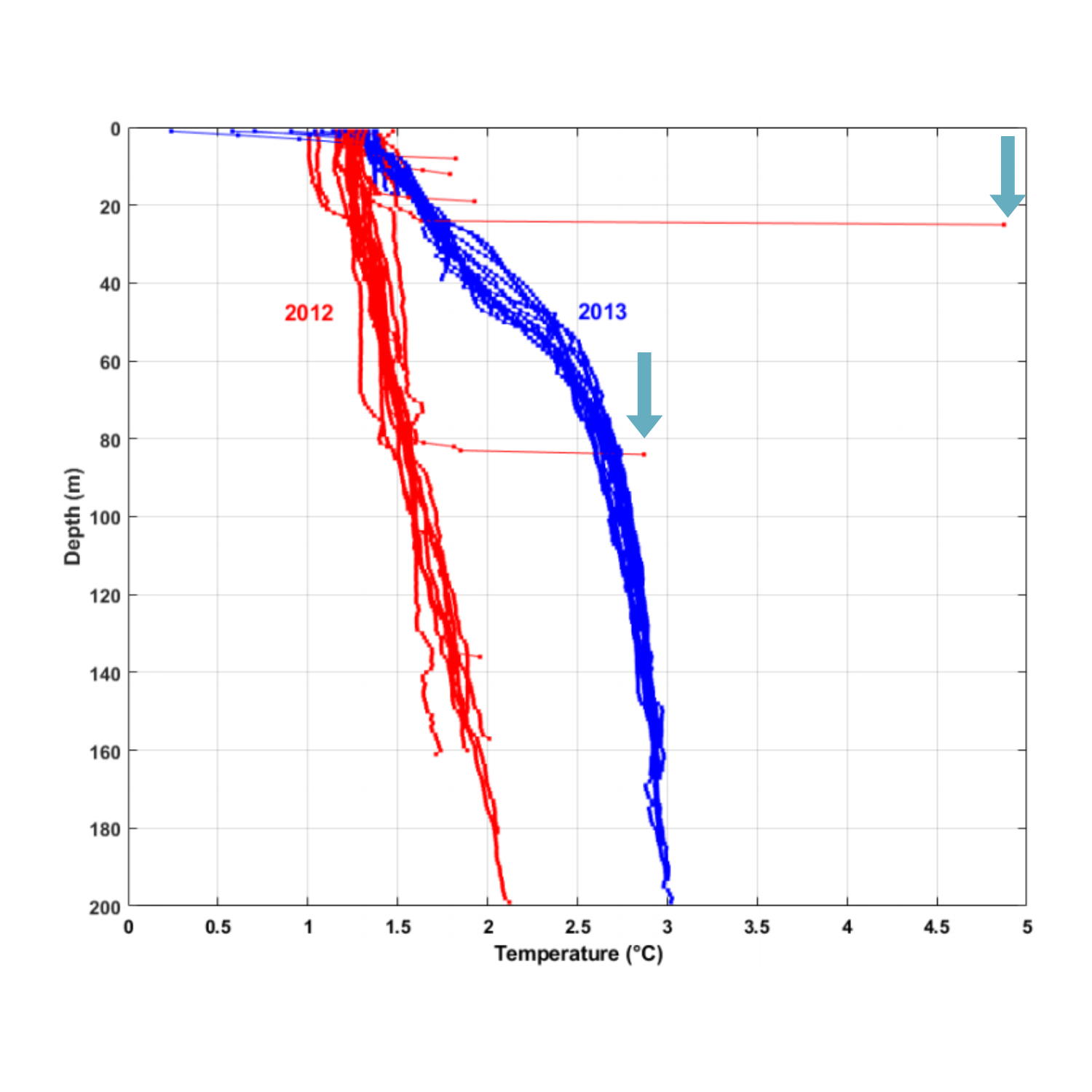
Fig. 6 showing the anomalies in temperature measured 2012 marked with arrows.
Further results can be viewed in the article published in JÖKULL No. 75, 2025.